Grinding is the step most people underrate. You can buy excellent beans and own a decent brewer, but if the grind is wrong, the cup will be too, and no amount of fiddling with anything else will fix it. Grind is where a lot of home coffee quietly goes off the rails.
The idea behind it is simple once it clicks. Water pulls flavor out of coffee, and how fast it does that depends on how big the pieces are. Get the size right for your brewing method and everything else has room to shine. Get it wrong and even great beans taste harsh or thin.
Why grind size matters so much#
Think of grinding as controlling surface area. Fine grounds have a lot of surface exposed to water, so flavor comes out fast. Coarse grounds have less, so flavor comes out slowly. Every brewing method gives the water a different amount of time with the coffee, so each one needs a grind that matches that timing.
Espresso, for instance, forces water through the coffee in under a minute, so it needs a fine grind to extract enough flavor in that short window. A French press soaks the coffee for four minutes, so it needs a coarse grind — anything fine would over-extract and turn bitter, and would slip through the mesh filter into your cup. The method sets the clock; the grind keeps pace with it.
Two failure modes tell you when it's off. Under-extraction — too coarse, or too little time — tastes sour, thin, and weak, like the coffee never fully arrived. Over-extraction — too fine, or too long — tastes bitter, harsh, and drying. Learning to hear those two signals is most of what dialing in a grind is about.
The grind chart, method by method#
Grind size runs on a spectrum from powdery to chunky. Here's the rough map from finest to coarsest:
- Turkish — the finest of all, like flour, for coffee simmered in a pot.
- Espresso — fine, similar to table salt, for pressure brewing.
- Moka pot — fine to medium-fine, a touch coarser than espresso.
- Pour-over (cone) — medium-fine, around the texture of sand.
- Drip machine / flat-bottom — medium, like coarse sand.
- Pour-over (flat) and siphon — medium.
- French press — coarse, like sea salt or breadcrumbs.
- Cold brew — the coarsest, chunky, for a long overnight soak.
Use this as a starting point, not gospel. Grinders vary, beans vary, and your taste is the final judge. The chart gets you close; your palate does the fine-tuning.
Change one thing at a time. If you adjust the grind, brew again before touching anything else. Chasing several variables at once is how you end up confused and out of beans.
Burr grinders versus blade grinders#
If you take one practical lesson from all this, make it this: how evenly you grind matters as much as how fine. A blade grinder — the kind with a spinning propeller — chops beans into a chaotic mix of dust and boulders. The dust over-extracts and turns bitter while the boulders under-extract and go sour, all in the same brew, and you can't fix a problem that's pulling in two directions at once.
A burr grinder crushes beans between two abrasive surfaces set a fixed distance apart, so the grounds come out roughly the same size. That evenness is what lets a grind size actually mean something. It's also what makes dialing in possible, because when every particle is similar, adjusting the setting moves the whole batch together.
You don't need to spend a fortune. A modest hand-crank burr grinder outperforms most electric blade grinders and costs less than you'd think, though it asks for a bit of arm work each morning. An entry-level electric burr grinder is the upgrade most home brewers feel the most. If a blade grinder is what you've got, a small trick helps: shake it gently while grinding and stop before it turns to powder — imperfect, but better than nothing.
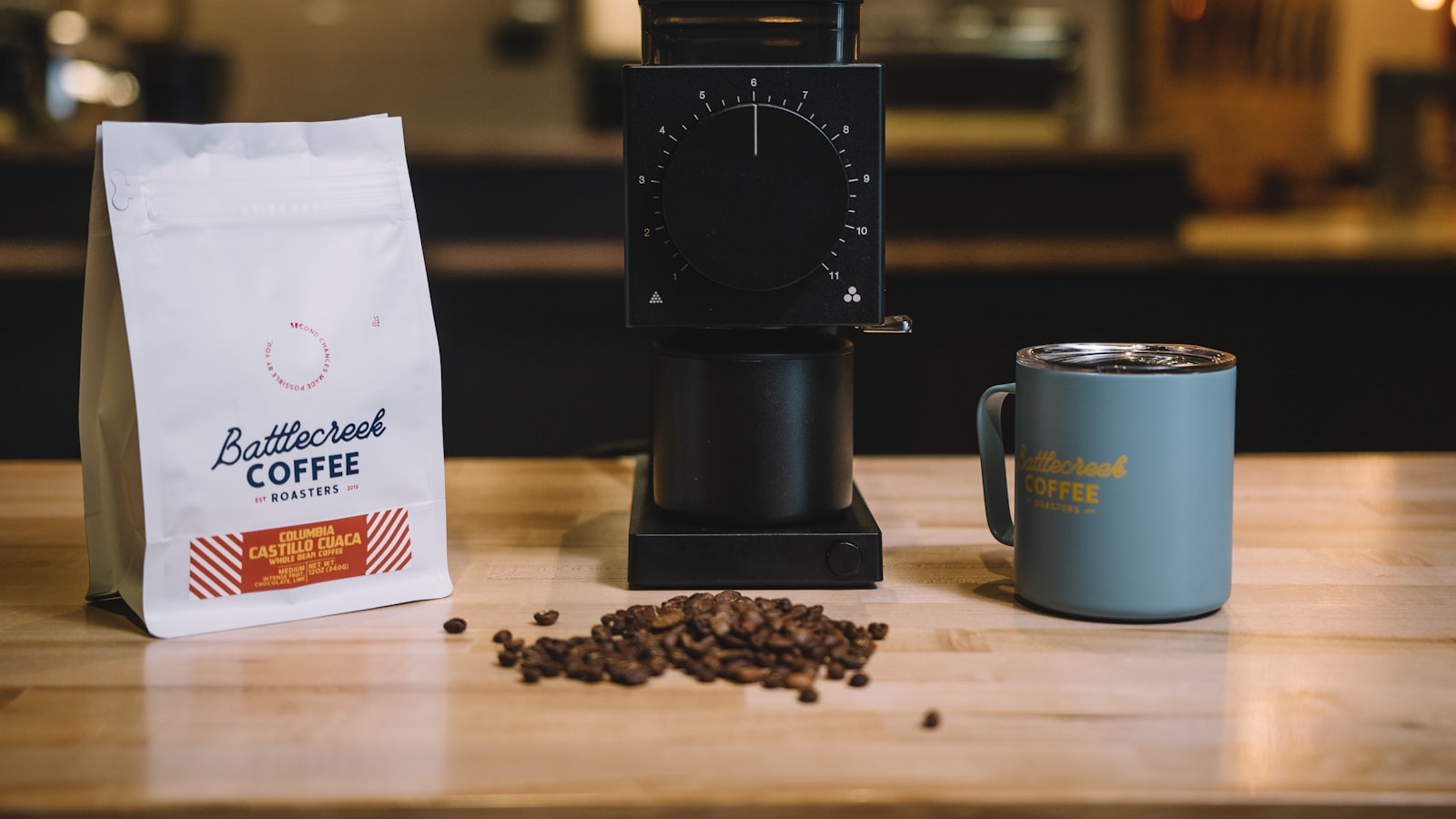
Burr grinders adjust in one of two ways, and it's worth knowing which you have. Stepped grinders click between fixed settings, which is simple and repeatable — handy when you switch between, say, French press and drip and want to return to a known point. Stepless grinders slide smoothly with no set stops, giving finer control at the cost of harder repeatability, which matters most for espresso where tiny changes count. Neither is required to make good coffee; a stepped grinder covers the everyday methods comfortably.
Grinding fresh and keeping it that way#
Whenever you can, grind right before you brew. Ground coffee has all that surface area exposed to air, so it stales in a matter of days while whole beans stay lively for weeks. That's the real reason to own a grinder at all: it lets you buy whole beans and unlock their freshness one brew at a time. The flip side is that good storage protects the beans between grinds, which I cover in how to store coffee beans to keep them fresh.
A few small habits keep your grinding honest. Weigh your beans if you can, so you're grinding a consistent amount. Brush out old grounds now and then, since stale coffee dust builds up and taints fresh brews. And don't grind a week's worth in advance to "save time" — you'll trade minutes for a duller cup every single day.
Static is the other small annoyance worth mentioning. Very dry beans, especially at fine settings, can make grounds cling to the grinder and scatter when you tap them out. A tiny splash of water on the beans before grinding — often called the Ross droplet technique — cuts the static and the mess considerably, without changing the flavor. It's a minor thing, but it makes the morning routine cleaner.
Dialing it in without overthinking#
Here's the whole method in plain terms. Start at the recommended grind for your brewer. Make a cup and taste it honestly. If it's bitter and harsh, your grind is too fine, so go a step coarser next time. If it's sour and weak, it's too coarse, so go a step finer. Adjust, brew, taste, repeat — usually two or three rounds gets you to something you genuinely like.
That loop works for any method and any beans, and it's worth doing again whenever you switch to a new bag, because a different roast or origin can want a slightly different setting. If you're still building your beans shortlist, how to choose whole bean coffee you'll love pairs naturally with this — the better the beans going in, the more your careful grinding pays off. Trust your taste over any chart, keep it fresh, and grind evenly. Everything good in the cup starts there.