Tea asks for less gear than coffee, which is part of its charm. You can make a lovely cup with almost nothing. But a few well-chosen pieces make loose leaf tea easier and more enjoyable, and they open the door to leaves that never fit inside a teabag. The goal isn't to fill a cupboard — it's to give the leaves what they need and keep the ritual simple.
The most important idea to hold onto is room. Tea leaves need space to unfurl and move in the water; that's how they release their full flavor. Almost every choice below comes back to that one principle. Once you understand it, picking gear becomes far easier, because you're just asking whether a given tool gives the leaves enough space.
Why loose leaf needs room#
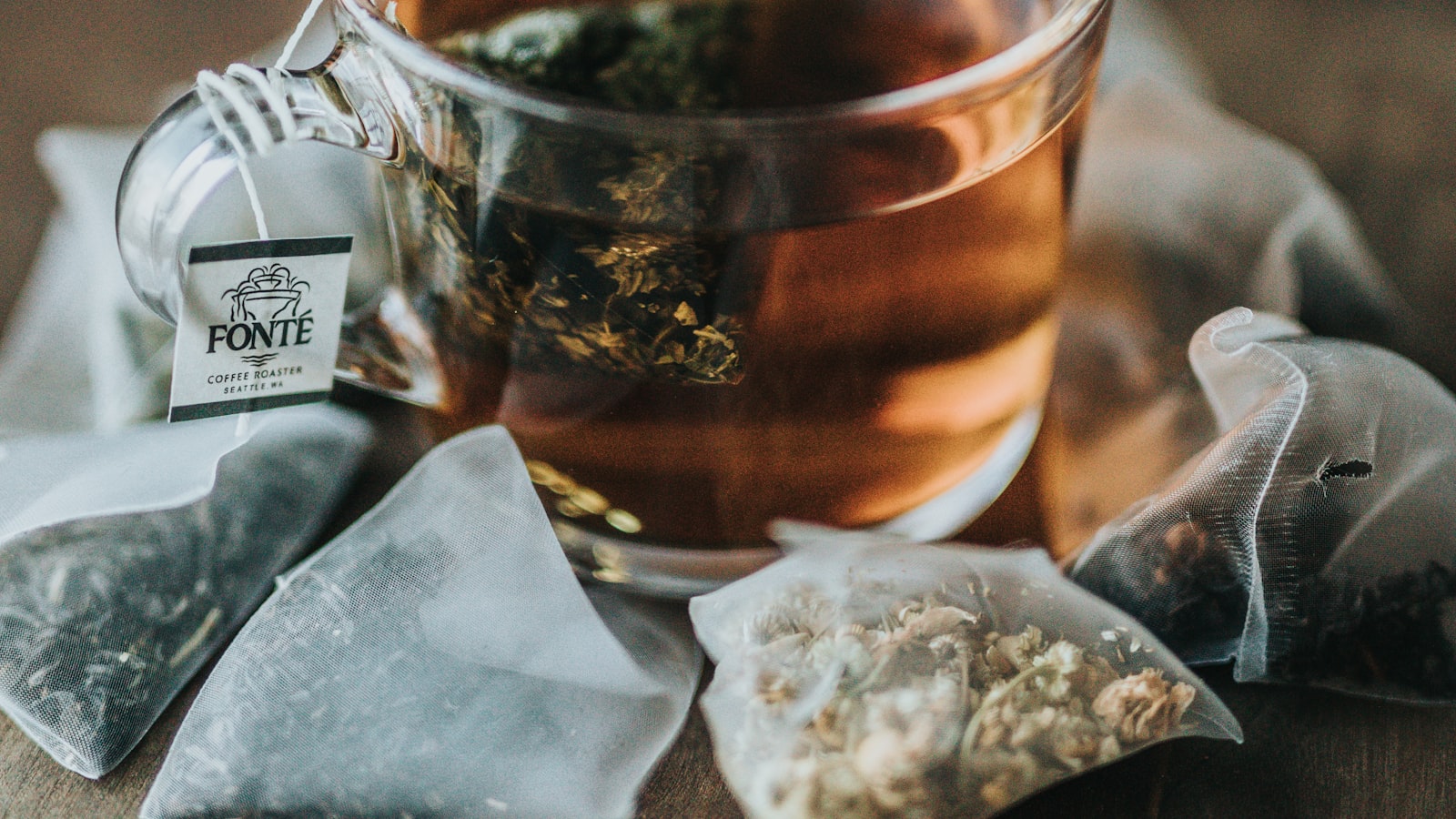
The reason loose leaf tea tends to taste better than the dust inside many teabags comes down to space. Whole and broken leaves are packed with flavor, but they only give it up properly when hot water can circulate all around them and the leaves can swell to their full size.
Cramp them into a tight little ball or a stuffed bag, and the water can't reach the inner leaves. The result is a weaker, flatter cup that doesn't reflect the quality of the tea. So the single most useful thing any piece of tea gear can do is let the leaves expand freely. Keep that in mind and you'll instantly see why some clever-looking gadgets brew disappointing tea.
The humble basket infuser#
If you're brewing one cup at a time, a basket infuser is the easiest place to start, and honestly it's all many people ever need. It's a fine-mesh basket that sits inside your mug, holds the loose leaves, and gives them plenty of room to swell. When the tea has steeped, you lift the whole basket out and the brewing stops.
Basket infusers are cheap, simple to clean, and work with almost any tea. Look for one with a wide, roomy basket rather than a narrow one — the extra space is exactly what the leaves want. Many come with a small lid that doubles as a drip tray to set the basket on afterward, which keeps your counter tidy. For a first purchase, this is the one I'd recommend without hesitation.
Skip the tiny novelty infusers and the cramped metal balls. They look sweet, but they squeeze the leaves so tightly that the tea can't develop. A plain roomy basket beats them every time.
Cleaning a basket infuser is refreshingly easy, which matters more than it sounds. Tip the spent leaves into the compost or bin, give the mesh a rinse, and set it aside to dry. Because it's a single open basket, there are no awkward corners for leaves to lodge in. If tea stains or a little scale build up over the months, an occasional soak sorts them out. Gear you can clean in seconds is gear you'll actually keep using, and that steady use is what turns a good cup into a daily habit.
When a teapot makes sense#
A teapot comes into its own when you're making more than one cup, sharing with someone, or brewing a tea you want to steep several times. Pouring for two from a pot is simply nicer than juggling separate mugs, and many good teas can be infused more than once, giving a slightly different character each time.
Teapots come in different materials, and each has its feel. Glass lets you watch the color develop and the leaves dance, which is quietly lovely. Ceramic and porcelain hold heat well and suit almost any tea. Cast iron keeps tea hot for a long time and feels substantial, though it's heavier and needs care to avoid rust. Whichever you choose, look for one with a built-in strainer or a removable infuser basket inside, so the leaves have room to move and you can still pour a clear cup.
Size is worth a thought here too. A large pot is lovely for company, but if you usually drink alone, a big pot cools and over-steeps before you reach the bottom. A small one- or two-cup pot often suits daily life better, and you can always brew a second round. Many good teas are happy to be infused more than once, each steep drawing out a slightly different character, so a modest pot and repeated steeps can stretch a spoonful of quality leaves surprisingly far.
Strainers and the extras#
Beyond the two mainstays, a few small tools round out a tea setup, though none are strictly essential:
- A fine mesh strainer, for catching stray leaves when you pour from a bare pot
- A small scoop, for measuring leaves consistently from cup to cup
- A tea timer or a simple clock, since steeping time changes flavor a lot
- A little dish, to rest a used infuser without dripping everywhere
Add these slowly and only if you feel their absence. A strainer is handy if you like brewing leaves loose in the pot and straining as you pour. A scoop helps you repeat a cup you enjoyed. But you can make excellent tea with just a roomy infuser and a mug, so don't feel you need the full collection to begin.
Water, temperature, and the leaves#
Gear is only half the story — the water you pour matters just as much. Different teas want different temperatures. Delicate green and white teas can turn bitter and astringent if you drown them in boiling water, while black teas and herbal infusions are happy with water just off the boil. Getting this roughly right does more for your cup than any fancy pot.
This is where your kettle earns its keep. A variable-temperature kettle lets you match the water to the tea without guessing, though you can manage perfectly well by boiling and letting the water cool for a short while first. If you're weighing up how much kettle you need, it's worth reading how to pick a kettle so you spend on the features that actually help your brewing. Pair sensible water with a roomy infuser, and even modest leaves taste noticeably better.
Start small, brew well#
Tea rewards simplicity. You don't need a shelf of pots and gadgets to make a beautiful cup — a single roomy infuser and hot water at the right temperature will carry you a long way. Add a teapot when you start sharing or steeping multiple times, pick up a strainer or scoop only when you miss having one, and let your habits guide the rest. If you're building a home setup from scratch, tea gear slots in cheaply alongside everything else, and a thoughtful budget setup has plenty of room for both leaves and beans. Give the leaves space, mind the water, and keep it simple — that's the whole craft.